Purchase
We’ve begun the process of converting our non-fiction preparedness collection books from 6”×9” to 8.5”×11” for easier printing. Our first offering is The Family Emergency Plan. We’re staring with this non-fiction book because it is a workbook with lots of tables for users/readers to fill out as they map their families emergency plans. There are also pages for taking notes in many of the chapters. It only made sense to start with this book.
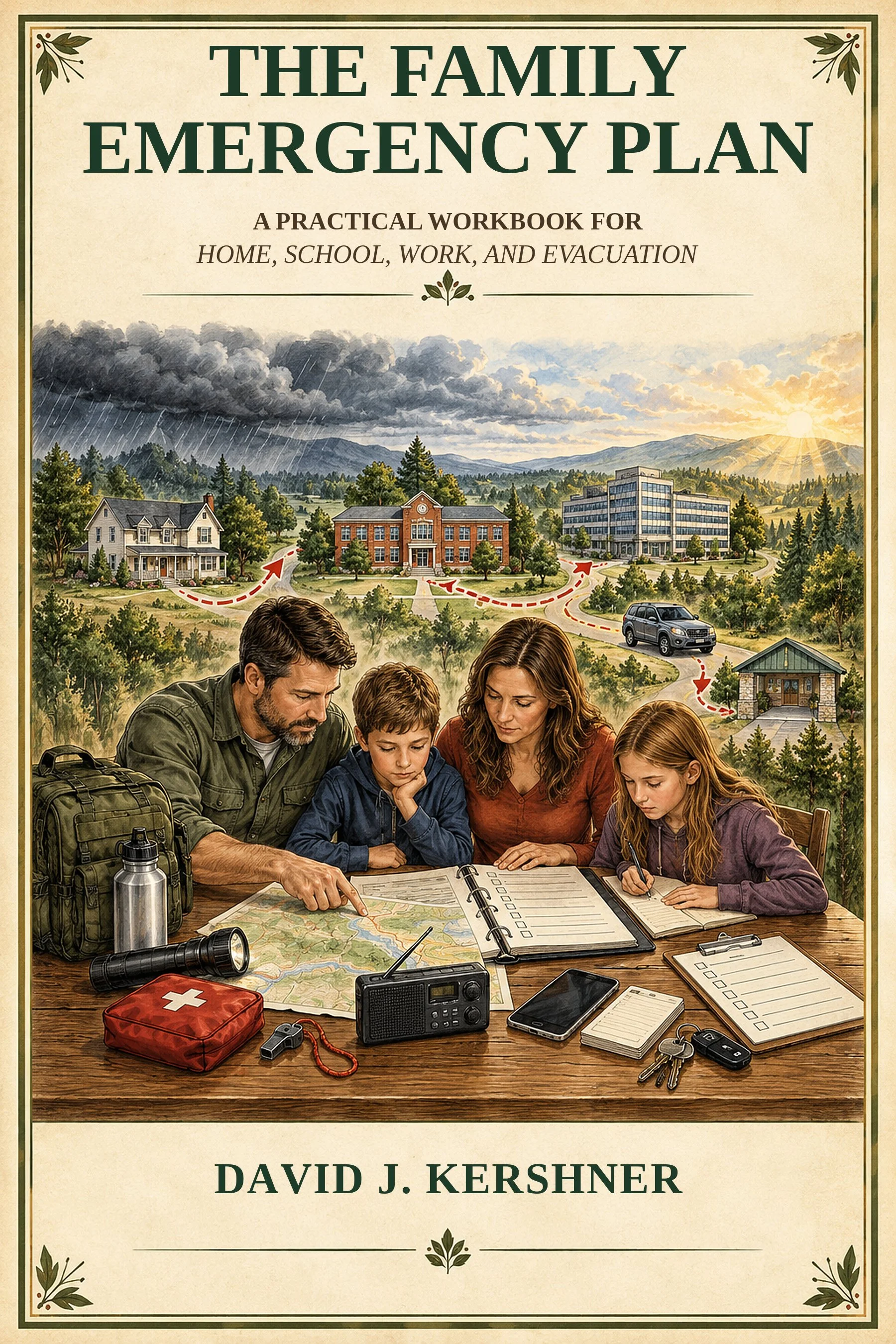
The Family Emergency Plan
A Practical Workbook for Home, School, Work, and Evacuation
The purpose behind The Family Emergency Plan workbook is not to convince you that disaster is hiding behind every cloud, parked outside your house, or waiting for you at the next traffic light. The purpose is much simpler: to help your household make a few important decisions before stress, noise, darkness, bad weather, road closures, or an urgent telephone call makes those decisions harder.
Most families have fragments of an emergency plan. Someone knows where the flashlights are. Someone else remembers the name of the insurance agent. A child has heard that the family should meet by the mailbox if there is a fire. One adult keeps a phone charger in the car. Another has a photograph of the dog’s vaccination record buried somewhere in a text-message thread. Those fragments are useful, but they are not yet a plan.
A plan exists when the correct people know what to do, where to go, how to communicate, what to take, and when to change course. A plan is even better when it is written down, available without an internet connection, and practiced often enough that no one has to invent it under pressure.
The purpose behind The Family Emergency Plan workbook is not to convince you that disaster is hiding behind every cloud, parked outside your house, or waiting for you at the next traffic light. The purpose is much simpler: to help your household make a few important decisions before stress, noise, darkness, bad weather, road closures, or an urgent telephone call makes those decisions harder.
Most families have fragments of an emergency plan. Someone knows where the flashlights are. Someone else remembers the name of the insurance agent. A child has heard that the family should meet by the mailbox if there is a fire. One adult keeps a phone charger in the car. Those fragments are useful, but they are not yet a plan.
A plan exists when the correct people know what to do, where to go, how to communicate, what to take, and when to change course. A plan is even better when it is written down, available without an internet connection, and practiced often enough that no one has to invent it under pressure.