Homeopathic Uses for Pine Trees
In Episode 122 of the Kershner Files, I discussed a Facebook reel that I’d found which presents a number of uses for pine trees. Below is an extract of the text of that reel as presented by Southern Herbalist Jeremy VanMaanen. All of the following is credited to him and all rights remain with him. If you’d like to view the original Facebook reel and/or begin following Jeremy, here’s the link to the original post: Jeremy VanMaanen Southern Herbalist
Most people walk past pine trees every day without realizing they’re looking at one of the most historically useful medicinal plants in North America. Long before pharmacies, supplements, and imported remedies, pine trees were part of the everyday medicine cabinet for people living across the South. Several species grow throughout the region, including Pinus taeda, Pinus palustris, and Pinus echinata. Southern herbalists, frontier families, and Indigenous communities all found ways to use different parts of these trees — needles, resin, bark, and pollen — each offering something useful.
One of the most well-known traditional uses was for the lungs. Pine needle teas and steams were used when someone was dealing with congestion, coughs, or a heavy chest. The volatile oils in pine give that unmistakable forest smell, and those aromatic compounds help loosen mucus and open the airways. Even today many over-the-counter chest rubs and inhalants rely on pine-derived compounds like pinene for their respiratory effects. When you smell that fresh pine scent, you’re smelling the same compounds people historically relied on to help clear the lungs.
Another important traditional use involved pine resin, sometimes called pine pitch. Resin naturally seals wounds on a tree, and people noticed it could help protect cuts and scrapes as well. Pine pitch was commonly melted and mixed with animal fat or beeswax to create salves used on wounds, splinters, and skin infections. The sticky resin forms a protective barrier while also containing antimicrobial compounds. Modern research has confirmed that several pine terpenes — especially alpha-pinene and beta-pinene — show antibacterial and anti-inflammatory activity, helping explain why these traditional remedies often worked.
Pine also served as a nutritional ally during difficult seasons. Pine needle tea contains vitamin C and antioxidants, which made it valuable during winter months when fresh greens were scarce. In various parts of North America, people relied on pine needle infusions to help prevent deficiency illnesses when other foods were limited. It was a simple, accessible way to get nutrients from a plant that grows nearly everywhere.
Then there is pine pollen, which has become increasingly interesting to modern herbalists. Pine pollen is the fine yellow dust released from male cones each spring. Traditionally it was collected as a nutritive tonic, and modern laboratory analysis has found that pine pollen contains small amounts of naturally occurring androgens — compounds chemically related to testosterone. While the quantities are small and the body’s absorption is still debated, pine pollen also contains amino acids, minerals, and antioxidants that contribute to its reputation as a vitality-supporting plant.
Taken together, the pine tree is a remarkable example of how a single plant can provide multiple forms of support. Needles for respiratory preparations, resin for topical applications, pollen for nutrition, and even the inner bark historically used as emergency food. It’s not an exotic plant found halfway around the world. It’s one of the most common trees across the American landscape, especially here in the South.
For many people interested in traditional herbal knowledge, pine is a reminder that useful plants aren’t always rare or hard to find. Sometimes they’re the trees lining the road, the woods behind the house, or the forest you walk through every day. When you start learning the plants around you, you realize that nature has been quietly providing resources for generations — long before modern medicine cabinets existed.
Orchards
The following article was submitted to James Wesley Rawles’ SurvivalBlog website in May/June of 2021. Most of the content made it into my book Preparing to Prepare. I thought my readers might like a condensed source for this information.
When someone says the word ‘orchard,’ most people begin to immediately conjure images of fall and vast acres of fruit trees, hay rides, pumpkin patches, corn mazes, apple harvests, making cider, etc. To those with a preparedness mindset though, the word ‘orchard’ also implies benefits like self-sufficiency, attraction of wild game for hunting/trapping, diversified protein sources, fur for blankets, boots, hats, coats, and gloves, as well as bartering. However, the term ‘orchard’ can have broader connotations beyond your typical fruit tree acreage. For many, myself included, the term ’orchard’ stretches beyond fruit trees and includes nut trees, berry bushes, vine fruit, and beekeeping.
When you, or your family, are reviewing and considering a land purchase, you would do well to take into the account your ability to incorporate some or all of the options noted previously (fruit/nut trees, berry bushes, vine fruits, and beekeeping). Having the ability to incorporate all of the varieties noted into the broader definition of an orchard helps everyone. You, your family, your group/community, and wildlife all can benefit from the planning of this resource. I’ve added wildlife because fruit and nut trees attract them in droves and will allow you to diversify your food options (protein) year round and during a collapse.
If you think you might want to plan an orchard, I would definitely recommend doing two things:
Learning your plant hardiness zone is fairly self-explanatory. Once you know that, you can begin researching which types of trees, shrubs, and vine crops are suitable to your location, or future location. To that end, the first place I recommend looking is online. You’ll be able to gain a solid knowledge base and generate questions that you can either try and answer on your own with additional research or bring the questions with you to a local arborist or nursery. The online resources can also lead you to the purchase of valuable and reputable non-fiction books for your library from highly knowledgeable and respected authors, researchers, growers, and scientists.
When you begin your online research, I recommend the Stark Bros website and that can be found here: https://www.starkbros.com. I’ve found that their website has one of the easiest interfaces for consumers to navigate and there’s a wealth of information available about fruit and nut trees as well as a nice variety of berry plants and bushes. As an example, Stark Bros. published ‘Growing Guides’ for individual fruits, nuts, and berries as well as a homestead guide for fruit trees. You can find that information using these two URL’s:
For all of the information available online, I would still highly recommend that you procure additional and specific information from local arborists and nurseries. They will be able to confirm or correct any information you find online and answer the questions you generated while you were doing your research. Local resources are going to be your most knowledgeable and easily reachable resources outside of local clubs and organizations. All of these local resources will help better direct your knowledge base as it pertains to your USDA Plant Hardiness zone.
Fruit Trees
Below is some of the research I did for myself on fruit and nut trees that were compatible with my Plant Hardiness Zone (6a). Take note of the fruit types that state ‘Poll Req’ (Pollinator Required) as opposed to ‘Self Poll’ (Self Pollinating). Pollinator Required means that you will need to plant more than one of these trees in order for the blossoms to become fruit. Also, notice that I chose dwarf species when possible. This is a personal preference and was done solely for ease of harvesting and tree maintenance.
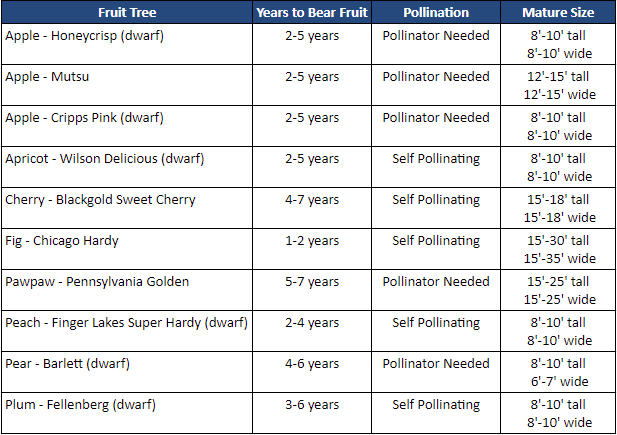
Pay close attention to spacing, maturity, and bloom time recommendations offered by your assorted resources (online, books, and local). Additionally, you’ll be able to read up on any provided nutritional information for the raw fruit. One of the things you’ll notice right away is that the fruits are high in carbohydrates and low on protein due to their sugar content.
Nut Trees
In order to provide an alternative source of protein, nut trees should be incorporated into your orchard. However, this is easier said than done. Planting nut trees in my Plant Hardiness Zone (6a), like planting fruit trees, automatically creates a limiting factor due to temperature variations. In addition, nut trees add an additional component of sheer size, as they are generally much larger than their fruit bearing brethren. However, there are still plenty of options available to me in my zone.
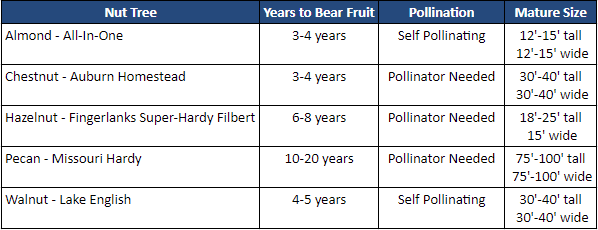
When selecting your orchard location, pay particular attention to the track of the sun. You’ll want the nut trees on the north side of the orchard so they don’t shade the fruit trees.
Can you imagine what you’d be able to barter for with a well thought out orchard at your disposal with just the fruit and nut trees? The possibilities are seemingly endless if you plan.
Berry Bushes & Vine Fruits
Another way to procure a source of fruit is to plant berry bushes and vine fruits like grapes. Other vine fruits include cantaloupe, melon, watermelon, etc. but these are usually in the garden proper. As was noted in the Fruit Trees section, fruits, or in this case berries, are high in sugar and therefore carbohydrates, but lack a lot of protein. On the plus side, they attract alternative protein food sources in the form of wildlife, particularly birds. Therefore, invest in an air rifle or become adept at using a slingshot and procure many rolls of reusable plastic bird netting if you want to save your harvest. That being said, there are a few things you’ll need to know about berry bushes. For example:
Berries do very well in pots so don’t discount deck/patio space in your planning
Don’t place red raspberries within 100’of black raspberries
Black raspberries and blueberries are high in antioxidants so there’s some medicinal properties that can be utilized as well
Here’s some nutritional information that I cobbled together from a variety or resources that’ll help provide some clarity as to the benefits of berry bushes and vine fruits in your orchard/garden planning. Take note of the Vitamin C content. This is an important vitamin and will help keep medical issues like scurvy at bay when transportation systems involving cross country trucking/rail and/or international shipping breakdown. Additional, the fiber content will help keep everyone regular.
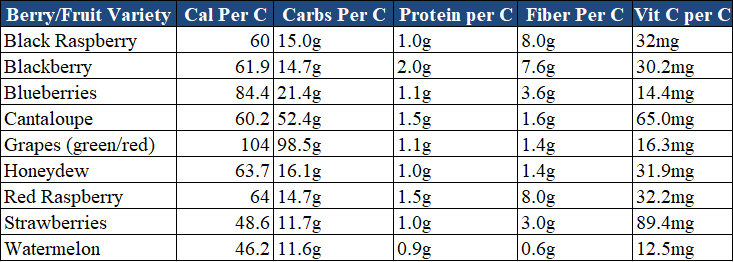
Of course, there are dozens of different types of fruit vines and berry bushes. Do your research and choose wisely. I did find an article during my research that was extremely helpful in the building and expanding of my own knowledge base for this topic. The article is titled “25 Types of Berries: List of Berries With Their Picture and Name (Identification Guide)” and steps through a large variety of berry varieties. That article can be found here: https://leafyplace.com/types-of-berries/. Review the article and then research which varieties are compatible with your Plant Hardiness Zone.
The key is to determine what grows in your location and what level of tartness is palatable to you, your family, and/or group/community. Beyond that, if you have the ability to dehydrate the berries or fruit they become extremely lightweight and make an excellent barter item or as a snack when out hunting or hiking. These options don’t account for the pies, jams, jellies, wines, and toppings that can be made from the fruit. Be careful with the strawberries though. They are super spreaders in the garden plot so they really need to be segregated and walled off with rock or timbers so they don’t grow where you don’t want them. If anything ever needed to be in a pot or container, it was strawberries.
Beekeeping
The last element of a robust orchard is beekeeping. I would highly recommend that you begin learning everything you can about this skillset. If you want a successful vegetable garden, orchard, and medicinal garden you are going to need pollinators. Having a couple beehives will definitely help to ensure a successful harvest. The general rule of thumb is 1-2 hives per acre. Personally, I think it would be preferable to stack the deck in your favor and have your own source of pollinators as opposed to relying solely on the whims of Mother Nature, which can be fickle at times.
Mother Nature isn’t the only fickle thing about incorporating beehives though. Most city and town ordinances prohibit the housing of bee colonies on your property within city limits. Therefore, this approach is really best suited for those that are not subject to zoning and HOA rules.
Doing a basic web search for the term ‘beekeeper training’ will yield a wide variety of options available to you in your area for acquiring this skillset. Some classes are online while others can be attended in person at college extensions or beekeeper clubs. Additionally, you can contact established beekeepers in your area, rent hive boxes, and share in the spoils of the collected honey. Having access to a decent supply of honey is extremely beneficial as the by-product of all that pollination is a natural sweetener as well as a highly valuable medicinal ingredient.
Water
The last aspect of an orchard that needs to be discussed is the incorporation of water. This key element is needed most as the orchard is being installed and the plants and trees are growing toward maturity and developing their tap root. Water is going to be the most labor intensive aspect of installing an orchard. Preferably, install the water lines/piping before you install the trees so you can account for the spacing required between trees/crops. The disturbed dirt from the line installation is also a very good visual indicator of where not to dig when planting your trees, bushes, and vines.
Your options for water sources are varied and depend entirely on what is available to you on your particular plot of land/acreage. Typically, your orchard isn’t near a water line so your best bet is going to be to install a hand pump. Or, depending on the size of the orchard, multiple hand pumps. Regardless of what solution you employ, it must be easily winterized (frost free). There are kits available everywhere online for the hand pump well piping and handles so do a basic search and read, read, read. Then ask more questions and continue reading until you’re firm in your knowledge.
As much as I don’t want to recommend this particular platform, you’ll be able to watch countless hours of video where people have chronicled the installation of a hand pump on YouTube. To get you started in the building of this particular piece of knowledge, start with this video from the “Through Our Eyes” channel and go from there: Simple Pump Deep Well Hand Pump Install.

FINALLY! A Time for Reckoning (Part 5) is Available in Audio!
Well folks… It’s been a long, trying journey but FINALLY all five parts of my fictional series are now available in audio format! As of August 18, 2022, the book is live on iTunes, Audible, and Amazon and available for download.
I have freebie codes available for all 5 parts for as long as they last so send me an email at djkpublishinghouse@gmail.com to request your codes!
That’s it, that’s the whole message. Short and sweet
Capitalism & Meritocracy vs Communism/Socialism/Bernie & the Squad
So, just to level set, I come from a military family. I’ve had family members in the military going back multiple generations for over 100+ years. As a result, when I see and hear sitting members of Congress, like Senator Bernie Sanders and a ‘squad’ of House members, espousing the merits of socialism, communism, and Marxism or declaring that the principles associated with these various forms of government and repression just haven’t been implemented correctly, it truly causes me to seethe and see red. Granted, my family, and the families of millions of Americans have fought for this country just so we can preserve the right of some to say stupid stuff, but it still causes me to pause and take a few deep breaths before speaking.
What these Congressional members fail to recognize and understand is that, for better or worse, the United States, even with all of its faults, is a Constitutional Republic employing a mixed market capitalist economy that is a meritocracy at its core. In simple terms, meritocracy is the idea that people get ahead based on their own accomplishments rather than, for example, on their parents' social class. This is the heart of the “American Dream” that members of Congress seem hell bent on destroying all in the name of some demented understanding of the words ‘fairness’ and ‘equity.’
With the exception of one ‘squad’ member, all are natural born United States citizens. The one that is not is now a naturalized citizen who previously hailed from a highly corrupt east-African hell-hole known as Somalia. Even that nation defines its form of government as a ‘Federal Parliamentary Republic.’ Therefore, none of these members of Congress have EVER lived under the oppressive yoke of communism, socialism, or Marxism. But yet, they want to trash the country that has literally provided them with everything like multiple homes, flush bank accounts, full closets, refrigerators, and freezers, a peaceful night’s sleep without fear of being charged with insider trading, a robust retirement package, and access to a gold plated Cadillac healthcare plan that the rest of the citizenry pay for but do not have access to. In spite of all of these ‘perks’ of being a U.S. citizen and a sitting member of its Congressional body, they still want to push and cajole us to move toward one of these forms of government. A form of government, mind you, which has never worked by any degree or measure in any country where it was implemented. How’s Venezuela doing these days? How’s Cuba doing after 70+ years of communism? What’s the life expectancy in North Korea again?
Senator Sanders points to his beloved Scandinavian countries as examples of where socialism has worked. Unfortunately for the Senator, the very countries he’s pointing to (Norway, Sweden, and Finland) have publicly rebuffed him and his assertions and declared, ‘we are not a socialist country.’ It’s shocking to me, and perhaps it shouldn’t be, that none of these ‘progressive’ members of Congress remembers, or at a minimum read about, this:

That’s a picture that was taken of Boris Yeltsin before he replaced Mikhail Gorbachev while he was visiting a Texas grocery store in Houston in 1989. Here’s the thing. All of the Soviet Premiere’s and members of the Politburo knew that capitalism was a better economic engine than the strict state control’s inherent to communism. They knew that if the Soviet people saw what they themselves had seen throughout the world for 50 years, their grip on power and leadership would falter and collapse. And it did. Just two years after this picture was taken, the Soviet Union ceased to exist.
Day-in and day-out we see and hear Congress members as well as has-been celebrities and athletes promoting one of these despicable forms of government. They never just come out and declare “I love socialism,’ or ‘socialism is good and that’s what we need,’ but they ARE making these very statements through their actions. A good example of this is when they distance themselves from supporting the Cuban and Venezuelan people. These people are actively trying to make a positive change, toward freedom of all things, and these ‘progressives’ won’t give them the time of day. They openly rebuff any course correction out of socialism, communism, and state control toward capitalism, democracy, and free markets when they wear certain things like Fidel Castro or Che Guevara t-shirts. They continue their blind obedience to the brain washing and radicalization when they don’t speak out about products that they are approached to endorse. Instead, all they see, or saw, are dollar signs, a lot of dollar signs. So, they inked their name to that contract, jammed their fingers in their ears, and then put on horse blinders. To them, status and cash in the bank is more important than the conditions and labor practices where the products they endorse are manufactured, namely Asian sweatshops by children.
If you dig and look, you’ll notice some interesting things about protestors opposing their governments today. First off, if they aren’t actively being hunted, detained, disappeared, or shot, they can be found chanting and cheering for change while waving American flags. That’s right, AMERICAN FLAGS! They are waving those for a multitude of reasons.
In my opinion, however, I believe the primary reason they are waving those flags is to to garner support from the United States government itself. They want the U.S. military to swoop in and depose/topple their government because it is not fair, it is not equitable. It is corrupt to the core and they likely voted for it in some form or another and then it went off the rails. This is a typical and historical path. Socialism is usually voted into existence piece by piece over time until it consumes everything it its path and you have to shoot your way out of it. Communism is usually installed via revolution (Russia, China, Cuba, Vietnam, and Cambodia (which is a puppet democracy)).
Returning to the topic of the protestors now, Senator Sanders and the ‘squad’ are choosing to ignore them because they want oppression. They want divisive and distinct social classes full of have’s and have not’s. They want subservience to and dependency on the government. They want the government to control everything about a country’s economy. Of course they never come out and say this directly, but when they don’t publicly voice SUPPORT for the protestors they ARE saying all of the above. Those that choose not to protest vocally in these countries are choosing to flee. How many flotillas have arrived on our shores from Cuba in the last 50 years? That’s a number likely in the thousands. Now, how many flotillas have returned to that island disaster carrying U.S. citizens that have chosen to live under its ‘Unitary Marxist–Leninist one-party socialist republic’ form of government? Exactly zero.
I truly do not understand how you can live in, quite literally, the freest country on the face of the planet in the history of the planet, and hate it so much that you want to destroy it. I truly do not understand why these people simply don’t get on a boat, plane, train, or simply drive to the border, turn in their passport, renounce their citizenship and try to make a living in a place like North Korea, China, Russia, Cuba, Venezuela, or some select Middle Eastern countries. The reason they don’t is simple. They know that they can say and do the most ridiculous, inane, cancerous, vitriolic, and destructive horse manure and they’ll remain free to continue their antics. If they were to try ANY of these things in any of the countries/regions noted, if they weren’t detained as a spy upon entry, they would surely be detained and/or ‘disappeared’ for their vocal opposition to the government. Free choice, free will, free expression, etc. does not exist in these countries and our benevolent leaders on Pennsylvania Avenue, and those skulking the halls of Congress, are to busy trying to turn our country in to one of these disasters. They are to busy granting interviews espousing the merits of socialism and wantonly ignoring the active protests in these countries to see that these people need acknowledgement at a minimum and help to accomplish the worthy goal of trying to be free.
Here’s a video showing what appreciation a visitor from Cuba had for the things we take for granted. And here’s the article that inspired me to post this blog entry: Western Journal.
Patio Lights
I normally wouldn’t post something like this because it’s really not in the preparedness vein but hey… you should enjoy life and your surroundings too, right?
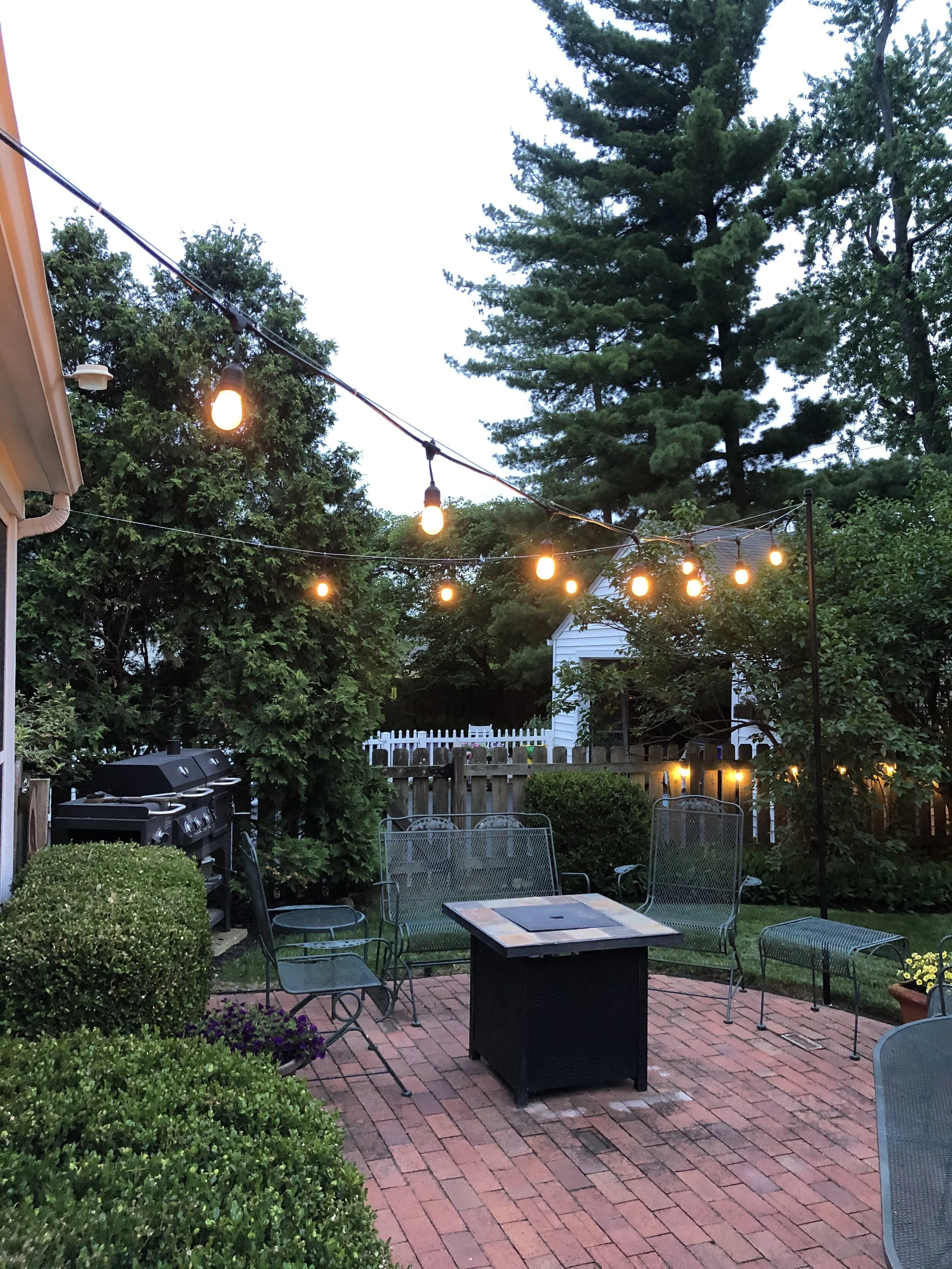
Anyhoo, we received three 25’ stings of patio lights from a friend who was shutting down one of his restaurant locations due to COViD. Two of the three strings went on the back privacy fence and they add a surprising bit of ambiance to the backyard.


The third string was placed around the screened in porch but it always looked tacky and I hated it.

So, to solve my light problem on the patio I purchased/used the following:
1 10’x1” diameter black galvanized pipe
1 pipe cap
1 2’x1 1/4” diameter pvc pipe
30’ of 3/16 wire
2 wire clamps
2 lag bolt hooks
1 turnbuckle hook
1 eye hook with spring washer and nut
1 can of Rustoleum primer & paint
6 2’ pieces of rebar
Here’s what you do:
Install the pipe cap.
Drill an appropriate sized hole into the galvanized pipe for the eye hook bolt an inch or so below the pipe cap.
Sand the pipe with 60 grit paper then wipe down with a damp cloth and dry it.
Paint the galvanized pipe and allow time to dry.
While the pipe is drying, drive the rebar into the ground to create a hole for the pvc and then remove the rebar.
Slide the pvc into the hole created by the rebar.
Now that the galvanized pipe paint is dry, install the eye hook on the galvanized pipe. Make sure the eye hook is vertical, not horizontal.
Install the two lag bolt hooks on the house at the desire location.
Insert the galvanized pipe into the pvc sleeve in the ground.
Use the wire clamps and create a 1” loop on one end of the 3/16 wire and attached it to one of the lag bolt hooks.
Thread the non-looped end of the wire through the eye hook on the galvanized pipe.
Pull the wire taught toward the second lag bolt hook where the turnbuckle hook will be installed and cut to length, leave 1”-2” of slack.
Create another 1” loop on the other end of the 3/16 wire.
Hang the second loop on the turnbuckle hook and then hang the turnbuckle on the lag bolt hook.
Turn the turnbuckle to tighten.
Use zip ties to hang the lights on the now strung wire.
Here’s what it looks like when you’re finished.


With so many people home due to COViD this is an easy project that you can do for very little cost. I even managed to walk a young inexperienced couple through Lowe’s as they were trying to do the same project.
Garden 2021
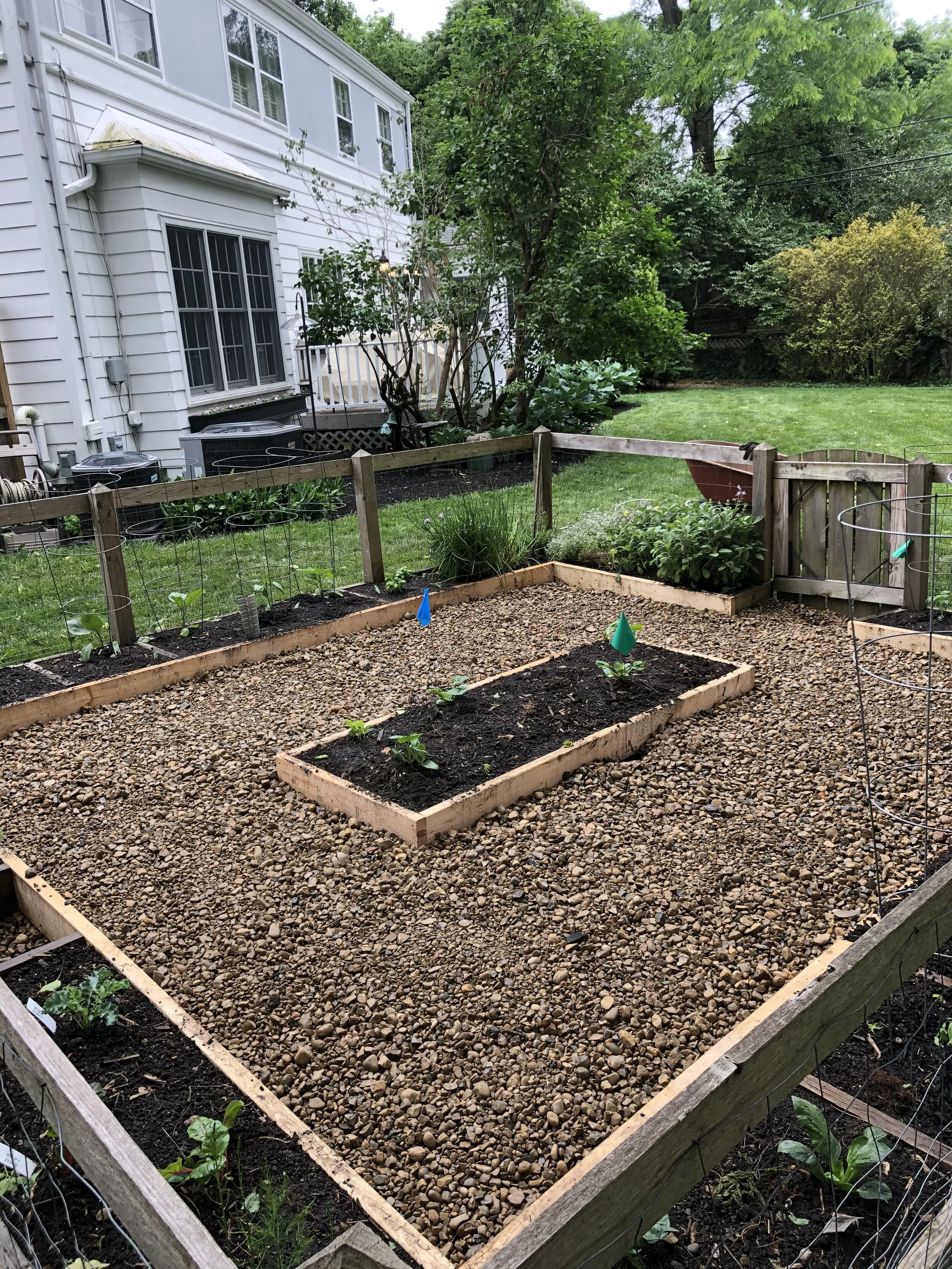
Wow! I finally got the garden in for the 2021 season. I don’t think I’ve worked this hard on the garden since the year I installed it. This is mainly due to not using pressure treated lumber (except the posts) and a number of the 2x8 members needing replacement. On top of that, a request was made to widen the aisles for Gma as her mobility has declined over the years.
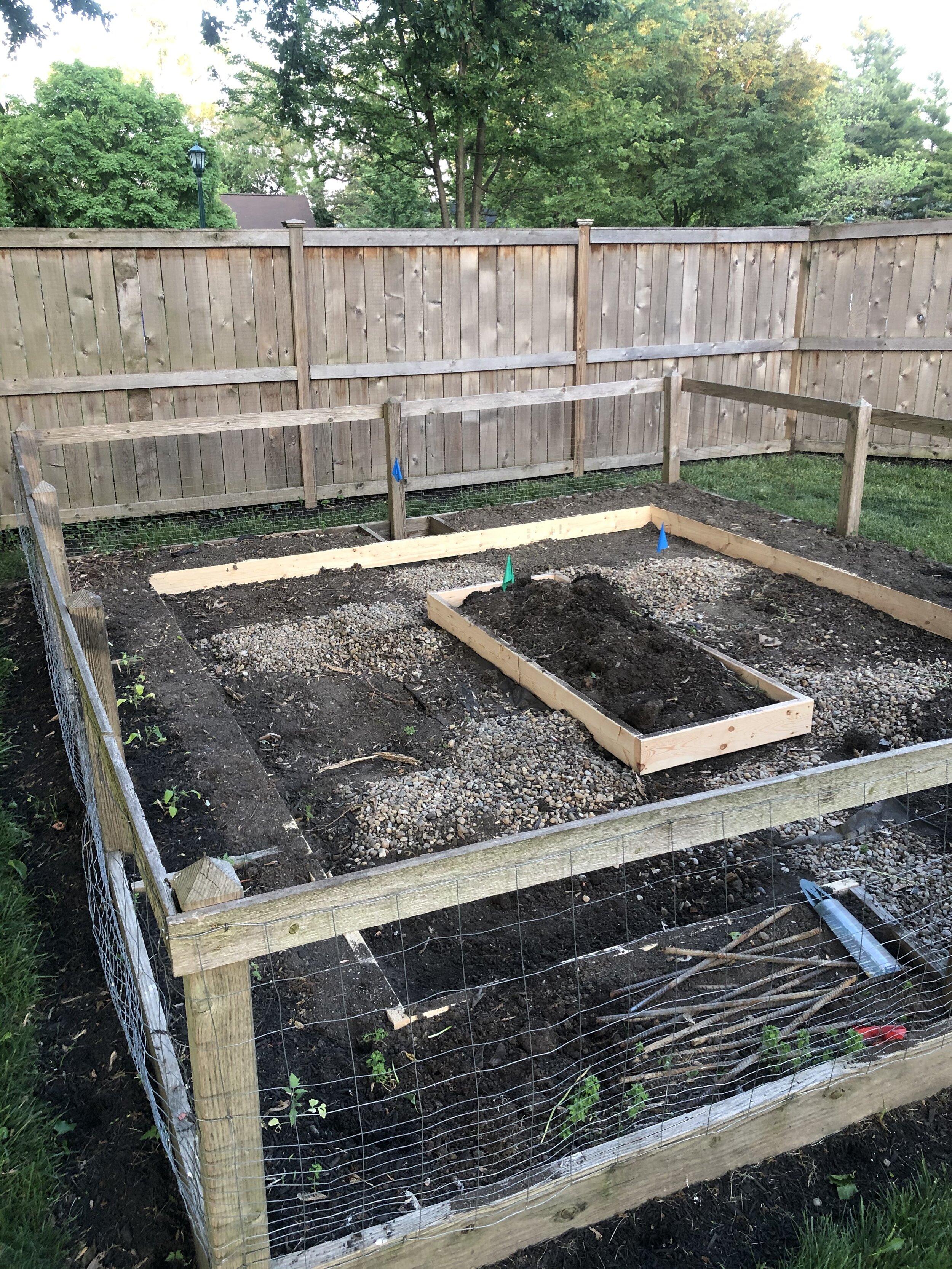
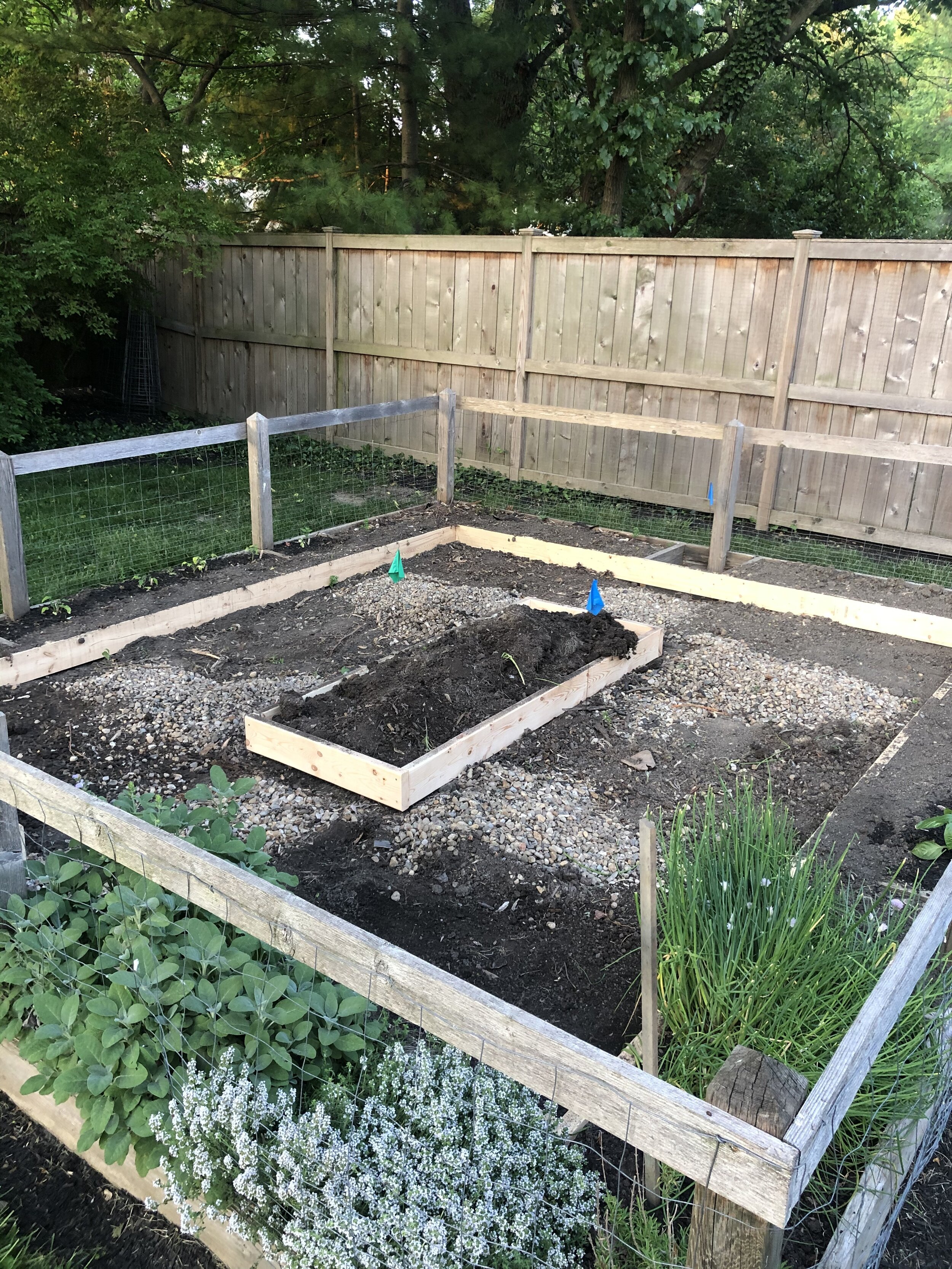
As a result of this request, I removed the six large beds which were 4’x6’ and 4’x5’ respectively and replaced them with a single, continuous bed that is only 18” wide around the perimeter. I also lengthened the bed in the middle by two feet. In so doing, I had to move a lot of dirt and rock. Overall, I’d say I physically moved at least 1 ton of dirt and rock (each) over the course of the last several weeks. Knowing that this was the task ahead of me, I started working far earlier than the typical long Memorial Day weekend.
Here are some images of the before, during , and after.
BEFORE


DURING
AFTER

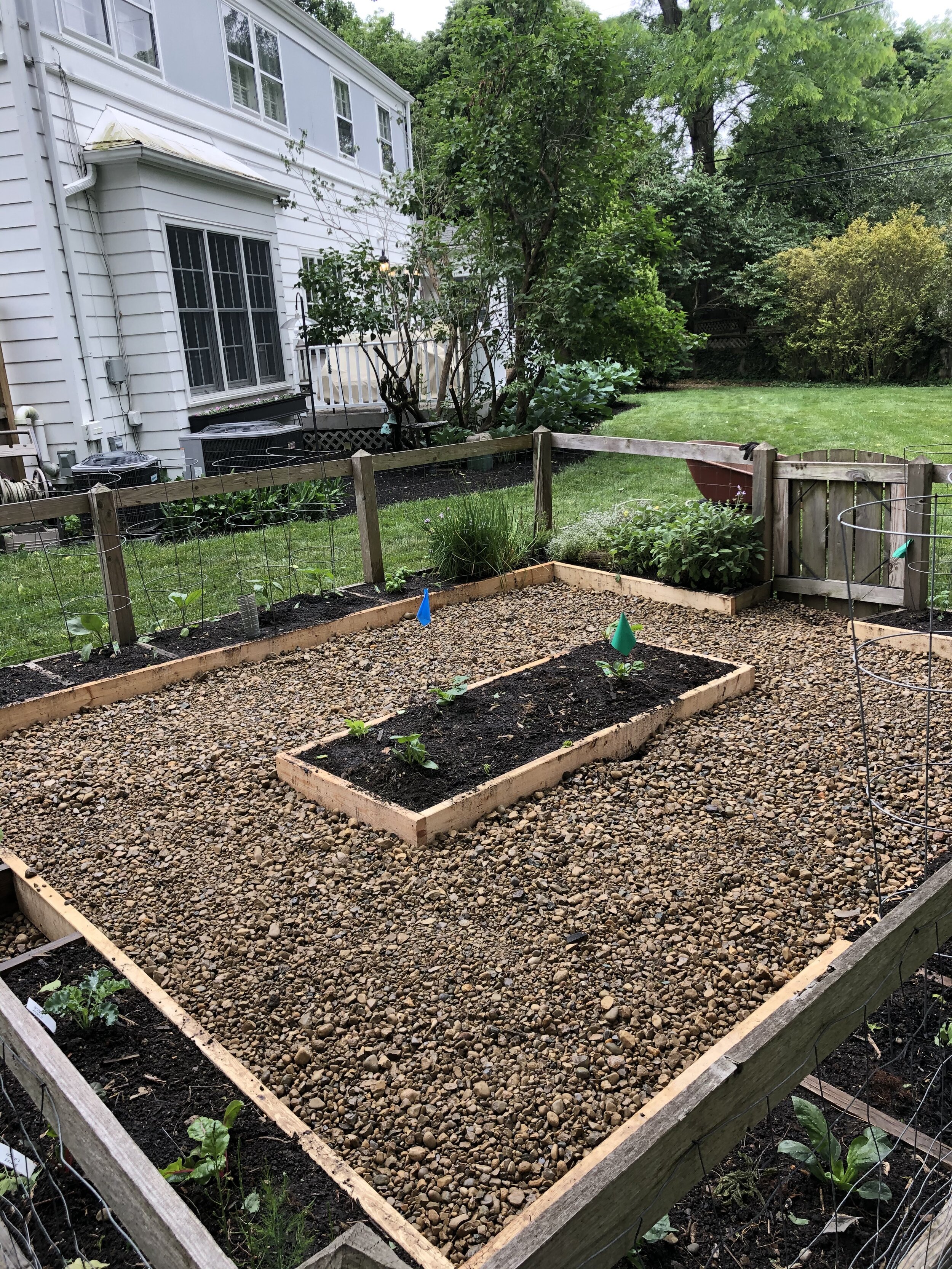
As for what was planted, I still managed to get everything into the garden that I typically plant. It is always more than enough for the family. I did add some things that I haven’t tried before namely the various “salad bar” crops (spinach, romaine, chard, and kale) but I’m lacking the garlic crop this year as the cloves didn’t survive winter and/or were stolen by ambitious squirrels or chipmunks.
2021 Planting:
Tomato
1 Cherry
2 Roma
3 Beefsteak
1 Marina
3 Glacier
1 Black Russian
Salad Bar Crops
2 Spinach
2 Red Romaine
2 Swiss Chard
2 Curly Kale
3 Butternut Squash
2 Yellow Squash
2 Zucchini
3 Cantaloupe
Cucumbers
2 Pickling
2 Heirloom Straight Long
2 Eggplant
4 Green Pepper
2 Basil
Existing Perennials:
1 Chive
1 Rosemary
1 Oregano
1 Sage
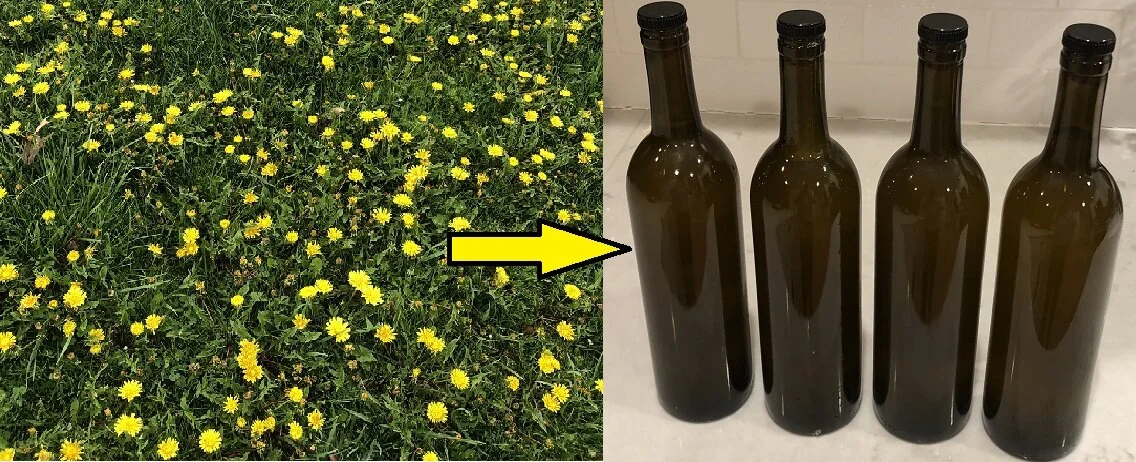
Made Me Some Wine!
Well, it took a week, and it wasn’t nearly as ‘labor intensive’ as the maple syrup, but I finally finished the dandelion wine making process. Here are my first impressions:
Making wine takes time. You spend most of that time watching and waiting and letting things soak and stew and ferment. All you can do is make sure you’ve read the directions correctly and are doing each of the steps completely.
Some of the steps that you undertake on a given day can take hours to complete. For example, Step 8 (see below) says to cook the strained liquid for 30-60 minutes with sugar and rinds. There’s an hour or so right there. Step 10 (see below) says to let the heated liquid cool to blood temperature (~ 98-100-degrees). There’s another hour or so. Do not put off certain steps until 8:00-9:00 pm and think you’re going to be in bed an hour. Because you won’t.
Be prepared for the smell. As I was performing Step 8, cooking the strained liquid with sugar and rinds, I literally woke up my wife at 11:30 pm with the stench! Legit. Out of no where, I hear this barked order, “Turn on the fan! Open a window!”
5 quarts of water, after being boiled twice, reduces in volume to about 3 1/2 -4 Q so I didn’t get six bottles of wine, but rather four.
If I had it to do over again, I would a.) use a bigger funnel, and b.) not use coffee filters to strain the final product as I was bottling. In the end, I couldn’t do anything about the funnel as it was the only one I had. However, once I sacrificed some more of my thin t-shirt to strain the liquid as I was bottling, things went a lot smoother and faster.
Here’s a complete video of the process:
And here’s the complete recipe I undertook as documented in my non-fiction book Home Remedies, Poultice, Salves & Tinctures:
Dandelion Wine
Treatments:
Liver function and maintenance.
Ingredients:
3-5 Q Dandelion Blossoms
5 Q Water
3 lbs Sugar
1 Orange + rind from avg sized orange (organic only, omit if not)
1 Lemon + rind from avg sized lemon (organic only, omit if not)
1 pkg (8 g) live yeast
Whole Wheat Bread
Instructions:
Find a field of dandelions in bloom. (Hint: follow the bees).
Pick dandelions with a sweeping motion of your parted fingers, like a comb (leave green sepals, discard stalks).
Put the blossoms immediately into a large crock-pot/glass mixing bowl/plastic container.
Boil the water and then pour it over flowers.
Cover your crock/bowl/container with cheesecloth.
Stir daily for three days.
On the fourth day, strain blossoms from liquid.
Cook strained liquid with sugar and rinds for 30-60 minutes.
Return the cooked liquid to the crock/bowl/container and add citrus juice.
When liquid has cooled to blood temperature, soften yeast, spread on toast, and float toast in crock/bowl/container.
Cover and let the yeast work for two days.
After two days, strain the liquid again.
Return strained liquid to the crock/bowl/container for one day and allow it to settle again.
Filter into very clean bottles and cork lightly.
Don't drink until winter solstice.
Notes:
A week of work yields a drink that’s good for your liver, as well.
Dandelion Wine Time
Ok, folks. Today’s the day. Today I’ll be starting the process of making Dandelion Wine. I’ve got my container in hand and my wine bottles are on order and should be here tomorrow. All told, it’s a week long process of stirring, boiling, straining, and waiting. Wish me luck!
Here’s how I’m approaching this endeavor.
Dandelions: My wife has pointed me to a field near her school with her highest recommendation as her school district is pesticide free. That’s a good thing people.
Container: I chose the size container I did based purely on math. The recipe calls for 3-5 quarts of dandelions and 5 quarts of water. As I result of the water and displacement from the dandelions, I knew I needed something bigger than what I current had on hand. I won’t be repeating the same silly mistakes I made when I did maple syrup! So, I bought a 12 quart food grade container. It was promptly washed when it arrived last week.
Wine Bottles: Basically, I did the math on how much wine will be produced by reviewing the recipe which calls for 5 quarts (Q) of water. It wasn’t difficult math, mind you, as this English major was able to deduce the capacity needed. To be clear, though, I needed to do this math (and the conversion) because the wine bottle capacity is measured in milliliters (ml) while the recipe is denoted in quarts. For you other English majors out there, here’s the math:
5 Q water is equal to 4.73176 L
4.73176 L is equal to 4731.76 ml (just slide the decimal, baby)
4731.76 ml divided by the 750 ml wine bottle capacity is 6.31
6.31 is the number of wine bottles needed to bottle and age the dandelion wine
Simple.
Look for my post next weekend where I’ll detail out the process and include the video.
Maple Sap Process - Video
As promised, I finally got iMovie to work and play nice in order to cobble together the dozen or so 30-second and 1-minute videos I took during the maple syrup making process. You can watch that here:
For some reason I kept calling my 2-gallon maple sap collection bucket a 3-gallon bucket. It’s not. It’s only 2-gallons. Also, I think I mis-stated the temperature that the sap needs to achieve in order to become maple syrup. That temperature is 219-degrees. Some syrup producers vary their temperature to get it to 220 or 221-degrees but it needs to at least reach 219-degrees.
Quail Hunting Trip
Originally, I was just going to to go camping on my friend’s property and try out some primitive skills I’d been reading about. To do this, I was going to drive and bring a bunch of gear. A few days (maybe a week) before I was to depart, those plans changed. Now I was going to be quail hunting at a private duck hunting club out on the coast on North Carolina. Due to the timetables involved around some of the activities associated with the quail hunt, I was now going to be flying instead of driving.
Driving to my friend’s property is 20 hours round trip. Driving to the duck hunting property on the coast is 26 hours round trip. Umm, what time is that flight again?
If I’ve learned anything from 2020 and this pandemic and all of the restrictions to my basic freedoms, it’s patience and flexibility.
So, I flew down Wednesday evening, got about four hours of sleep before my friend awoke me at 2:30 AM with the decree, “Dave, time to get it.” We we’re on the road by 3:00 AM to make the three hour drive from his place to the coast. From there, we met some friends of his who took us out past Harker’s Island for some salt water fishing. Here are some pictures from that adventure. I’d also like it noted for the record that he stole that Albacore from me.

Sunrise from the dock

Sunrise from the boat while heading out

Ocean was like glass that morning

This is the Harker’s Island lighthouse


From there was used the clubs fresh water impoundments to do a lot of large mouth bass fishing.
Friday and Saturday we went out in three separate groups to do some quail hunting. Each group had their own dog and handler. The club has a quail pen so we’d go in and box up 15 or so birds for each group and then the handlers would go and disperse them in the fields for the dogs to find. It’s a very cyclical thing to quail hunt this way. The club raises their own quail, the members and guests use the quail to maintain the shooting skills when it’s not duck season, the dogs and the trainers are utilized to maintain their skills as well. Then the members and guests eat the quail. Circle of life, baby.
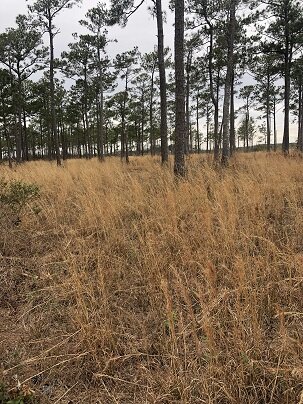
Here’s what one of the fields looks like before all of the shooting starts.
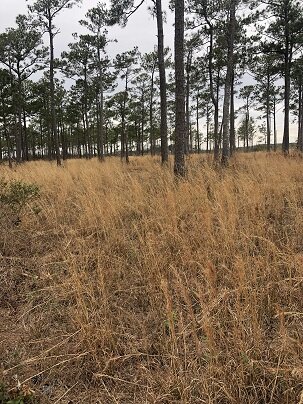
The club maintains several fields like this and there’s sorghum and millet and corn around for those that escape justice. The bush hog runs through the area several times a year to main the trails while leaving mini hedgerows for the birds to rest and nest in if we don’t manage to find them. The dogs are pretty good and we manage to find about 95% of them. The problem with birds and hunting like this is that they tend to walk off after they’ve been placed by the dog handlers. Most don’t, but some do.
Evenings were spent by this massive fire pit that measures about 3.5’ - 4’ in diameter just watching in silence over a cigar and a bourbon as the sun slips below the horizon off the point.


All in all, it was a great trip. I was able to relax and unwind and shake off this COViD funk. For a little while at least. My plan for next year, because I’ve already received an invite for that trip, is to just take the week off. I’ll drive down several days early and do some camping along the New River off the backside of my buddies property and then head to the coast.